Montreal Port Strike Averted: AI Gantry Crane Deal
Historic labor agreement prevents supply chain crisis with human-first automation clause.
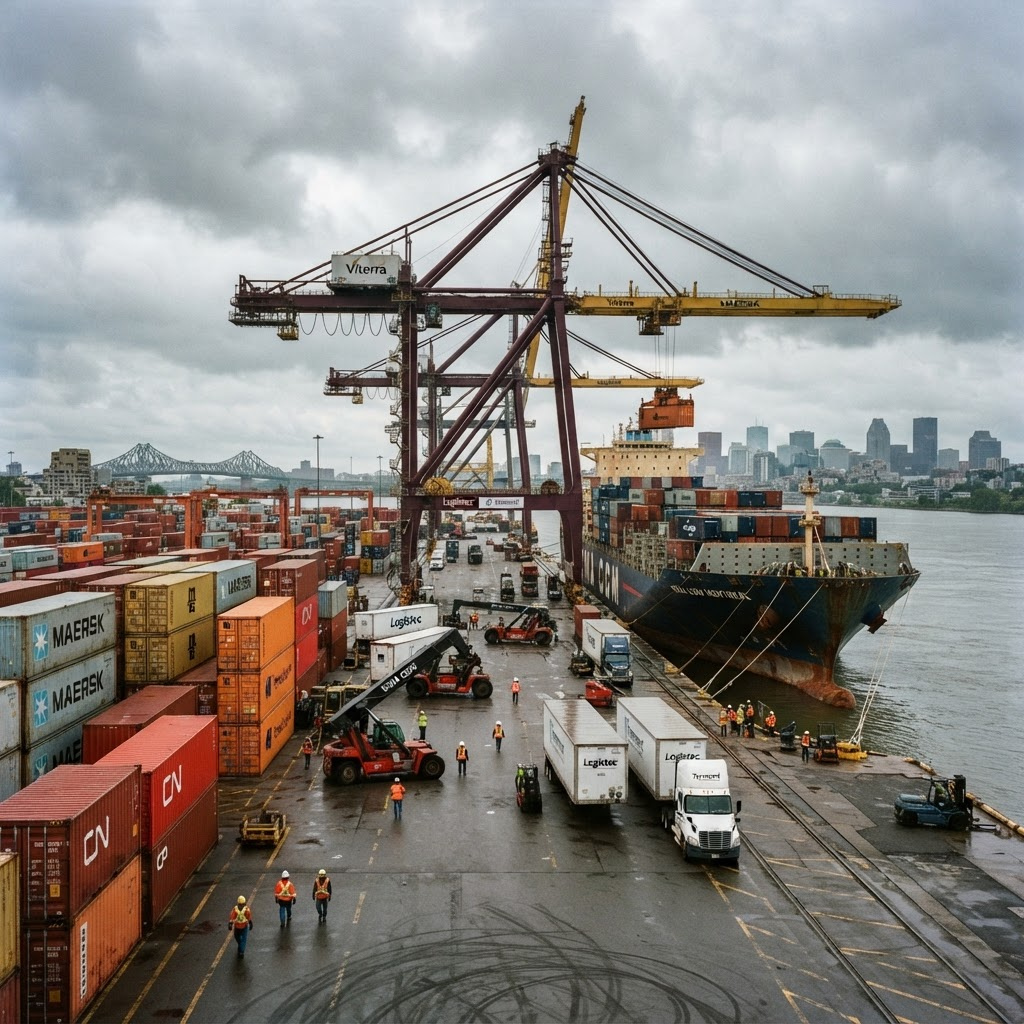
On April 28, 2026, a last-minute agreement between the Maritime Employers Association and the Longshoremen's Union prevented a catastrophic strike at the Port of Montreal. The deal includes a groundbreaking "human-first" clause regarding AI-driven automation.
Strike Context
A potential strike would have crippled Eastern Canada's supply chain, affecting imports and exports across the region. The port handles critical goods including automotive parts, electronics, and consumer products.
Labor Negotiations
The primary dispute centered on job security amid advancing automation technology. Union concerns focused on protecting worker livelihoods as AI and robotic systems expand. Management sought operational efficiency improvements.
Human-First Automation Clause
The agreement's innovative "human-first" clause mandates that automation implementation must prioritize worker transition. Displaced workers receive retraining and income support. Technology deployment includes workforce adjustment considerations.
Gantry Crane Automation
AI-driven gantry cranes are central to port modernization. These automated systems improve cargo handling efficiency. The agreement ensures humans remain in supervisory and decision-making roles.
Economic Impact Avoided
Strike avoidance prevents supply chain disruption worth billions annually. Consumer product availability is maintained. Businesses avoid production delays from cargo shortages.
Labor Relations Evolution
This agreement demonstrates that labor and management can cooperate on automation challenges. The human-first principle may influence how automation is implemented in other industries. Workers gain agency in technological transitions.
Long-Term Implications
The port maintains competitive global positioning with modern automation. Workers transition to higher-skill supervisory roles. The model shows how technological progress and worker welfare can coexist harmoniously.
Key Takeaways
- Strike averted
- Human-first automation
- Supply chain protected
- Labor-management cooperation